Gastroshiza: what people usually mean
If you searched gastroshiza, you’re not alone. In real-world usage, “gastroshiza” is most often a misspelling or alternate spelling people use when they mean gastroschisis.
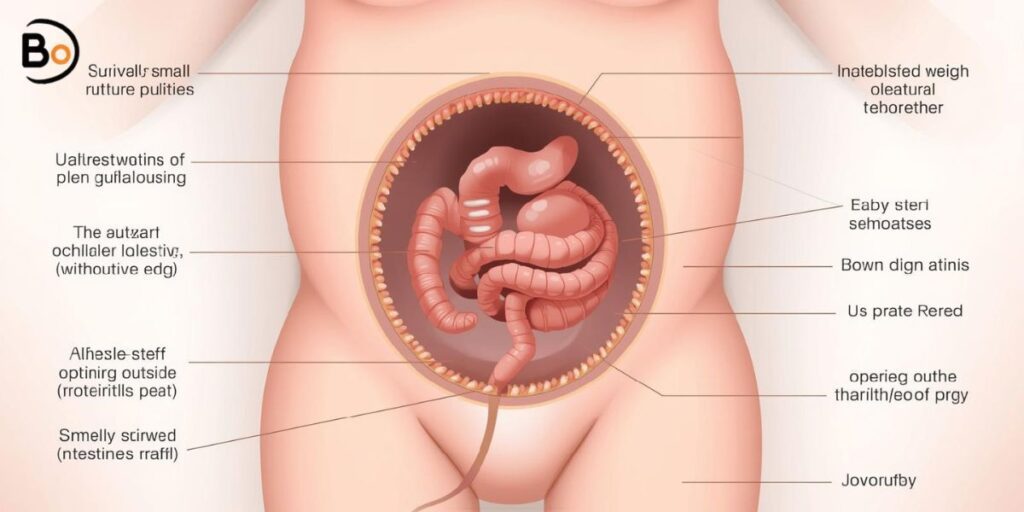
Quick answer (plain language): Gastroshiza usually refers to gastroschisis, a congenital abdominal wall defect where a baby’s intestines develop outside the belly through a small opening near the belly button, typically to the right of the umbilical cord.
That one sentence matters because it shapes everything that follows: how it’s diagnosed, why delivery planning is important, what surgery looks like, and what recovery typically involves.
What is gastroschisis?
Gastroschisis is a birth condition (present at birth) where there’s a paraumbilical defect—an opening in the abdominal wall. Through that opening, the intestines (and sometimes other abdominal organs) can protrude. A key feature is that the bowel is exposed directly to the amniotic fluid during pregnancy, which can lead to bowel inflammation, thickening, or a “rind” on the intestine.
Why it matters
Because the bowel is outside the body, gastroschisis is treated as an urgent neonatal condition. Most babies need:
- Immediate stabilization after birth
- NICU care
- Neonatal surgery to return the bowel to the abdomen and close the opening
The good news is that with timely care in a center experienced in neonatal surgery and intensive care, many babies recover and go on to live healthy lives.
Who is this information for?
This guide is written for both:
- B2C readers: expecting parents, families, caregivers, and students looking for clear explanations
- B2B readers: clinicians, educators, health writers, and clinics who need accurate terminology, classification, and care pathways
If you have a prenatal ultrasound report mentioning “gastroschisis” (or a similar-sounding term), use this guide to understand the typical next steps and to prepare better questions for your medical team.
How gastroschisis is found: diagnosis during pregnancy
Most cases are detected before birth during a second-trimester prenatal ultrasound, often around the “anatomy scan” timeframe. A common clue is seeing bowel loops outside the fetal abdomen.
Another common screening clue is elevated maternal serum AFP (alpha-fetoprotein), which can trigger further imaging.
What an ultrasound may show
- Free-floating bowel outside the abdomen
- A defect near the umbilical cord insertion
- Signs that guide risk assessment, like bowel dilation or thickening
- Growth trends, including intrauterine growth restriction (IUGR) or signs of prematurity risk
What happens after prenatal diagnosis (step-by-step)
Short answer: After a prenatal gastroschisis diagnosis, care usually includes serial ultrasounds, growth monitoring, delivery planning at a surgical center, NICU stabilization after birth, surgical closure (primary or staged with a silo), then gradual feeding while reducing TPN.
Typical pathway
- Referral to maternal-fetal medicine (MFM) for detailed counseling and monitoring
- Serial ultrasounds to watch growth, amniotic fluid, and bowel appearance
- Delivery planning at a hospital with a Level III/IV NICU (or equivalent) and pediatric surgery
- A delivery plan that balances fetal well-being with risks of prematurity
- Post-birth transfer directly to the NICU team and pediatric surgery evaluation
Causes and risk factors: what’s known (and what isn’t)
Families often ask, “Did I cause this?” In most cases, gastroschisis is not something a parent “did” knowingly. It develops early in fetal development.
Some risk factors and associations appear more often in research and clinical experience, including:
- Younger maternal age
- Smoking and certain substance exposures
- Environmental and nutritional factors (associations vary across studies)
Is gastroschisis genetic?
Gastroschisis is usually sporadic, meaning it occurs without a clear inherited genetic pattern. That said, your care team may consider genetic counseling depending on the full prenatal picture and any additional findings.
Gastroschisis vs omphalocele: the difference people confuse
These two conditions are often mixed up because both involve abdominal organs outside the belly.
Here’s the simplest way to remember it:
- Omphalocele has a membrane/sac.
- Gastroschisis does not.
Comparison table
| Feature | Gastroschisis | Omphalocele |
|---|---|---|
| Protective covering | No sac (no membrane) | Covered by a membrane/sac |
| Typical location | Usually right of umbilicus | At the umbilical cord insertion |
| Bowel exposure | Direct exposure to amniotic fluid | Protected within the sac |
| Associated anomalies | Often isolated | More often associated with other anomalies |
This comparison is important because it affects counseling, expected complications, and evaluation for additional conditions.
Treatment: what happens right after birth
Immediately after delivery, the priority is protecting the exposed bowel and stabilizing the baby.
Immediate NICU actions
- Keep the baby warm and stable (temperature, breathing, circulation)
- Protect the bowel from drying and contamination
- Start IV fluids and monitor electrolytes
- Assess for complications and plan surgical approach
Surgery options: primary closure vs staged closure with a silo
Two common strategies are used:
1) Primary closure
The bowel is placed back into the abdomen and the defect is closed in one procedure. This is possible when the bowel can fit safely without causing excessive pressure.
2) Staged closure (silo bag)
A silo is placed over the bowel to protect it. The bowel is gradually reduced back into the abdomen over several days, then the opening is closed.
Pros and cons table
| Approach | Pros | Cons |
|---|---|---|
| Primary closure | Faster closure, fewer days to reduction | Not always possible; may increase abdominal pressure |
| Staged closure (silo) | Gentler reduction, useful when bowel is swollen | Longer time to closure; extended NICU procedures |
Your baby’s team chooses based on the bowel condition, swelling, breathing stability, and overall safety.
Simple vs complex gastroschisis: why the label changes the course
A big point of confusion is the “simple” versus “complex” label.
Simple gastroschisis
This generally means the bowel is outside the abdomen but without major bowel injury.
Complex gastroschisis
This is used when gastroschisis is accompanied by complications such as:
- Intestinal atresia (a blocked or missing segment)
- Volvulus (twisting of the intestine)
- Ischemia (reduced blood flow)
- Necrosis (tissue injury)
- Perforation (a hole in the bowel)
Complex cases often involve longer recovery, feeding challenges, and greater reliance on specialized nutrition support.
Read Also: Jack Şoparov Explained: Real Person, Internet Meme, or Digital Folklore?
Feeding and nutrition: why TPN and “feeding intolerance” matter
After repair, the bowel needs time to wake up and work normally. During this time, many babies rely on total parenteral nutrition (TPN)—nutrition delivered through an IV—while feeds are introduced slowly.
What “feeding intolerance” can look like in NICU
- Slow progression of feeds
- Vomiting or increased gastric residuals (in some units)
- Abdominal distension
- Delayed stooling
- Need to pause and restart feeding advances
NICU teams typically use careful enteral feeding advancement protocols—small, measured increases—so the gut adapts while reducing dependence on TPN.
Why this affects length of stay
For many families, the biggest driver of NICU time isn’t the operation itself—it’s the feeding journey. Babies often remain hospitalized until they:
- Tolerate enough milk/formula feeds
- Grow steadily
- Maintain stable temperature and breathing
- No longer need IV nutrition
Prognosis and long-term outlook
Families want a clear answer: “Will my baby be okay?”
Short answer: Many babies with gastroschisis do well after surgery, especially in simple cases. Recovery depends on bowel health, complications (like atresia), prematurity, infection risk, and how quickly feeds can be advanced while reducing TPN.
What outcomes often depend on
- Gestational age at birth: prematurity can add respiratory and feeding complexity
- Bowel condition at birth: inflammation and thickening from amniotic fluid exposure
- Complex features: atresia, volvulus, ischemia, perforation
- Infection/sepsis risk: impacts recovery and nutrition tolerance
- Closure approach: staged closure may mean longer early intensive management
Long-term considerations
Many children eventually eat normally and grow well. Some may have:
- Ongoing feeding sensitivity early in life
- Slower growth for a period, especially after prolonged NICU stays
- Rarely, longer-term intestinal issues if complex gastroschisis required bowel resection
Every case is different, and your child’s surgical and neonatology team is best positioned to forecast the likely course.
Delivery timing: why you may hear different opinions
Parents often notice that clinicians don’t always agree on the “best” week to deliver. That’s because timing involves trade-offs:
- Delivering earlier may reduce time the bowel is exposed to amniotic fluid
- Delivering later may reduce prematurity complications
Many teams focus on close monitoring and individualized decision-making, especially if ultrasound shows changes that raise concern.
Costs and “pricing” questions (what really drives expense)
It’s natural to worry about cost—particularly in the US healthcare system.
Rather than quoting a number (which varies wildly by country, hospital, insurance, and complications), focus on the main cost drivers:
- NICU length of stay
- Surgical approach (primary vs staged closure)
- Days on a ventilator (if needed)
- Need for TPN and central line care
- Complications such as infection, bowel atresia, or repeat procedures
- Transfers between hospitals
If you’re facing financial uncertainty, ask to speak with the hospital’s financial counselor early. They can explain insurance coverage, prior authorizations, and assistance options.
Choosing the right care team and hospital (global, “near me” friendly)
If you’re still in the prenatal stage, where you deliver matters.
Look for a center with:
- A NICU capable of complex neonatal care (often Level III/IV or equivalent)
- 24/7 pediatric surgery availability
- Neonatal nutrition support for TPN
- Coordinated MFM + neonatology + pediatric surgery care
Common searches that reflect this need include:
- “pediatric surgeon near me”
- “NICU with neonatal surgery near me”
- “children’s hospital gastroschisis care”
- “maternal-fetal medicine consultation”
Practical checklists that reduce anxiety and improve decisions
Questions to ask your doctor after prenatal diagnosis
- Is this likely gastroschisis or another condition like omphalocele?
- What does the ultrasound suggest about bowel health (dilation, thickening)?
- How often will we do monitoring ultrasounds?
- Where should I deliver to ensure immediate NICU and pediatric surgery support?
- What is your center’s typical approach: primary closure or silo?
- How do you assess “simple vs complex gastroschisis” before birth?
- What would change the delivery plan?
NICU “what to expect” timeline (simplified)
- Day 0–1: stabilization, bowel protection, surgical planning
- Days 1–7 (varies): primary closure or staged reduction using a silo
- Week 1+ (varies): bowel recovery, start small feeds, continue TPN
- Weeks following: gradual feed advancement, growth, discharge readiness
Your baby’s team can tell you which step you’re in and what the next milestone will be.
Red flags and warnings (seek urgent medical guidance)
If you are pregnant and notice reduced fetal movement or concerning symptoms, contact your obstetric team urgently. After discharge, follow your surgeon’s instructions closely and seek urgent help if your baby has:
- Persistent vomiting (especially green/bilious)
- Fever, lethargy, signs of infection
- Poor feeding with dehydration signs
- Rapidly increasing abdominal swelling
This is educational information and not a substitute for medical care.
FAQs
1) Is gastroshiza the same as gastroschisis?
In most online searches, yes. “Gastroshiza” is typically a misspelling or informal variant referring to gastroschisis, the congenital abdominal wall defect.
2) Can gastroschisis be detected early?
Many cases are detected during the second-trimester ultrasound, often around the anatomy scan. Elevated maternal serum AFP can also prompt further evaluation.
3) What is the difference between gastroschisis and omphalocele?
Omphalocele is usually covered by a membrane (a sac), while gastroschisis has no sac, leaving bowel exposed to amniotic fluid. Their typical locations also differ.
4) Is gastroschisis genetic?
Most cases are not inherited in a clear genetic pattern. Your care team may still recommend tailored evaluation depending on the full pregnancy findings.
5) How long do babies stay in the NICU with gastroschisis?
Length of stay varies. The biggest factor is often how quickly bowel function returns and feeds can be advanced while reducing TPN. Complex gastroschisis tends to require longer hospitalization.
6) What is complex gastroschisis?
Complex gastroschisis generally includes bowel complications such as intestinal atresia, volvulus, ischemia, necrosis, or perforation, which can extend recovery and feeding challenges.
7) When can a baby start feeding after gastroschisis surgery?
Feeds usually start once the bowel begins to function, often introduced slowly with a planned enteral feeding advancement approach while IV nutrition supports growth.
8) Does every baby need a silo bag?
No. Some babies can have primary closure right away. A silo is commonly used when the bowel is swollen or when gradual reduction is safer.
9) What is the best time to deliver with gastroschisis?
There isn’t a single answer for every pregnancy. Delivery timing is individualized based on fetal monitoring, growth, bowel appearance, and balancing the risks of prematurity versus ongoing bowel exposure.
Conclusion
Gastroshiza is most commonly a search-term variation for gastroschisis, a congenital abdominal wall defect that requires coordinated prenatal monitoring, planned delivery at a surgical-capable center, NICU stabilization, and neonatal surgery (primary closure or staged closure with a silo). The recovery journey often hinges on bowel function and feeding—especially how long TPN is needed and how smoothly enteral feeds progress. If you’re facing this diagnosis, focus on the next practical steps: confirm terminology, ensure care at a center with pediatric surgery and advanced NICU support, and use targeted questions to understand whether the case looks simple or complex and what milestones to expect next.